Academic researchers step beyond the lecture hall to confront a growing environmental crisis at Sri Lanka’s coastal doorstep — armed with science, community partnerships, and a mandate to create lasting change.
By Department of Polymer Science, Faculty of Applied Sciences, USJ Published: 29 May 2026
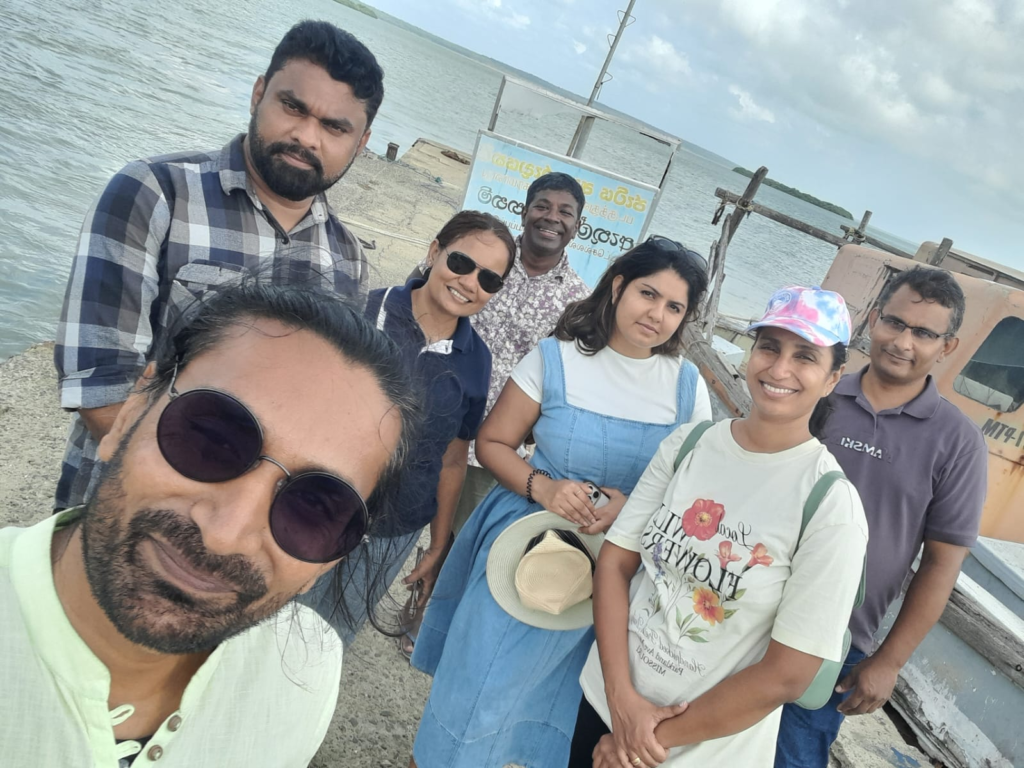
On the ground. Academic members of the Department of Polymer Science Dr. Dhammika, Dr. Sampath, Prof. Thilini, Dr. Bhagya, Dr. Sulashi and Prof. Thusitha together with Mr. Dilsiri Walikala, CEO – Kitesurfing Lanka (pvt) Ltd at the Kalpitiya coastal landing, 28 May 2026. The visit marks the formal commencement of a community-based CSR initiative aimed at tackling polymer waste mismanagement in the region.
The coastline of Kalpitiya is one of Sri Lanka’s most ecologically vibrant — home to dolphins, reef ecosystems, traditional fishing communities, and a thriving adventure tourism scene. It is also, increasingly, a frontline in the country’s war against plastic waste.
On 28 May 2026, a team of academic members from the Department of Polymer Science (DPS), Faculty of Applied Sciences (FAS), University of Sri Jayewardenepura made the journey to Kalpitiya — not to present at a conference or publish a paper, but to listen, observe, and begin the hard work of building solutions alongside the people who live and work on that coastline every day.
What they found was sobering. And what they have set in motion may prove to be one of the most impactful community-engaged research projects in the university’s recent history.
“When we go beyond books and go to ground level, we can learn a lot. I invite all high-ranking officers and policymakers to step beyond your day-to-day job role, go to the ground level, listen to local people, and then come up with real solutions — for the betterment of our motherland.”
— Prof. Thusitha Etampawala, Head of Department, Department of Polymer Science, FAS, USJ
BACKGROUND
A Connection That Sparked a Movement
This initiative did not begin in a committee meeting. It began with a sabbatical, a surfboard, and the kind of human connection that no research grant can manufacture.
Dr. Mark Staiger of the University of Canterbury first came to the Department of Polymer Science, USJ, through the network of Prof. Thilini Gunasekara. What followed were rich and impactful academic collaborations that left a lasting impression on both sides. During that same visit to Sri Lanka, Dr. Staiger also found his way to Kalpitiya — and to Kite Surfing Lanka (Pvt) Ltd.
It was there, on that sun-drenched coastline, that he met Mr. Dilsiri Walikala, the CEO of Kite Surfing Lanka — a man whose passion for the ocean runs far deeper than the tourism business he has built upon it. In conversation, Dr. Staiger mentioned the team at USJ’s Department of Polymer Science. That mention became a bridge. He connected Dilsiri directly to Prof. Etampawala, Head of the Department of Polymer Science, and the rest, as they say, followed.
Dilsiri is not a scientist. But he is something equally powerful — a person who sees a problem, refuses to normalise it, and keeps pushing until the right people are in the room. His initiative, his love for this coastline, and his willingness to reach across disciplines and institutions is what brought the DPS team to Kalpitiya. Science may provide the solutions, but it took one determined individual to set it all in motion.
INTERNATIONAL COLLABORATION This initiative draws on a partnership network spanning the University of Sri Jayewardenepura, the University of Canterbury (New Zealand), and local community stakeholders in Kalpitiya.
FIELD OBSERVATIONS
What the Team Found on the Ground
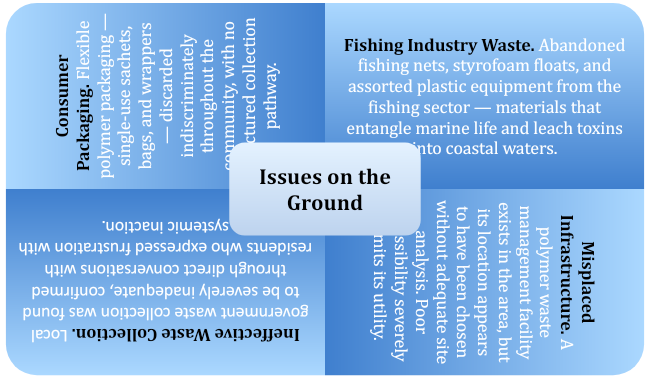
The DPS team arrived with open eyes and no predetermined conclusions. What they encountered was a multi-layered polymer waste crisis with several distinct and intersecting origins.
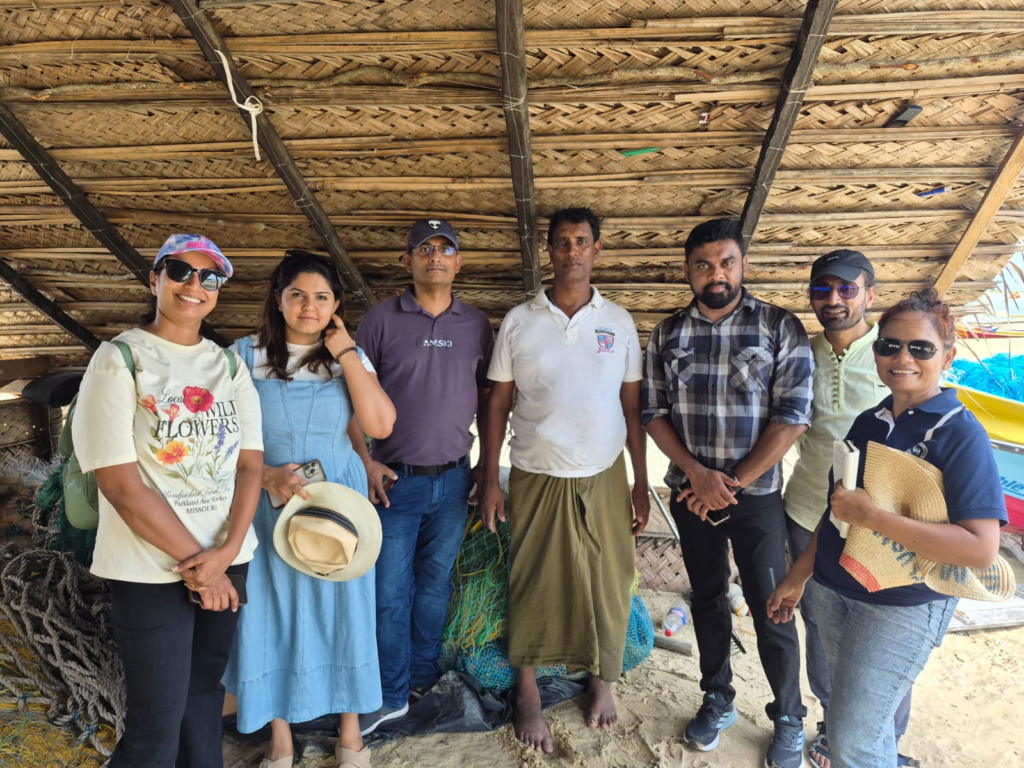
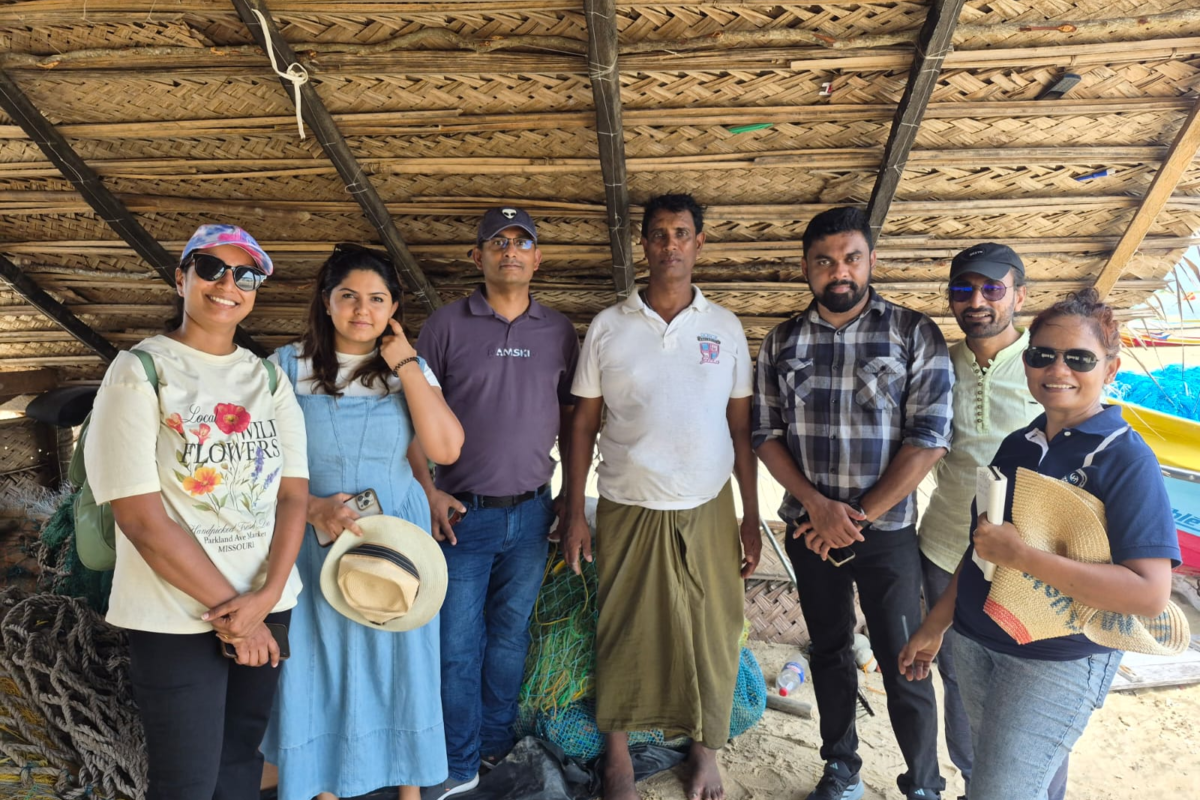
Listening first. The DPS team meets with local fishermen under a traditional kadjan shelter at the Kalpitiya fishing bay. Direct dialogue with the community is the cornerstone of the department’s approach.
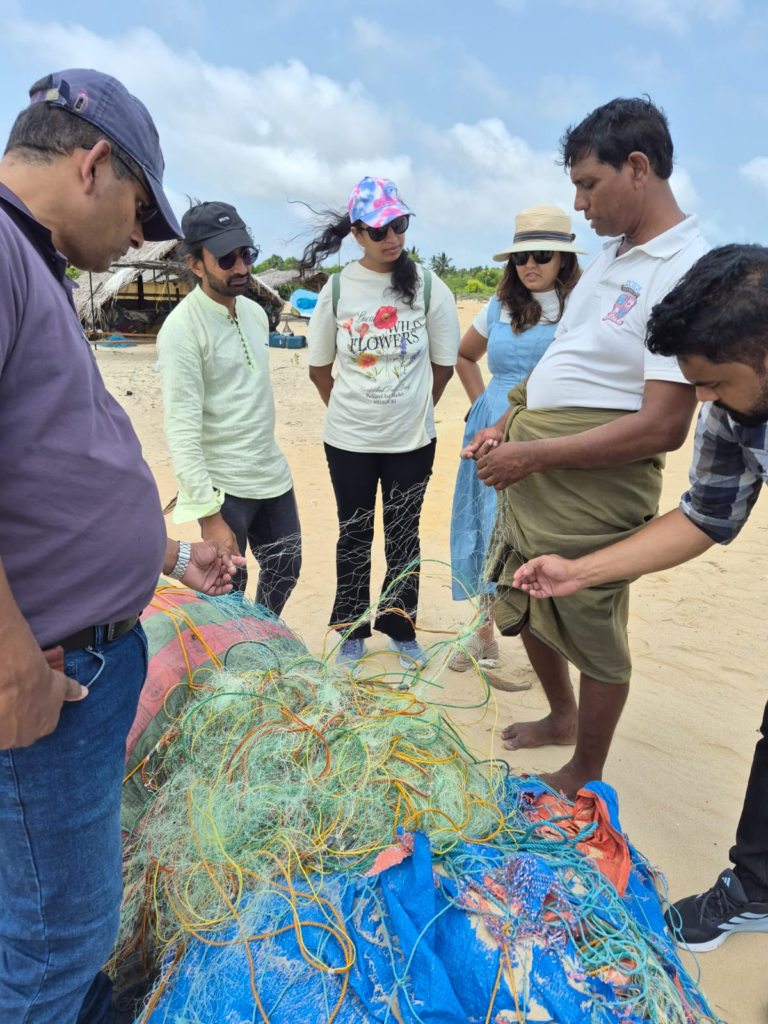
Waste or resource? Researchers and fishermen examine discarded fishing nets on the Kalpitiya shoreline. The DPS team is assessing technical potential for recycling these materials into value-added products.
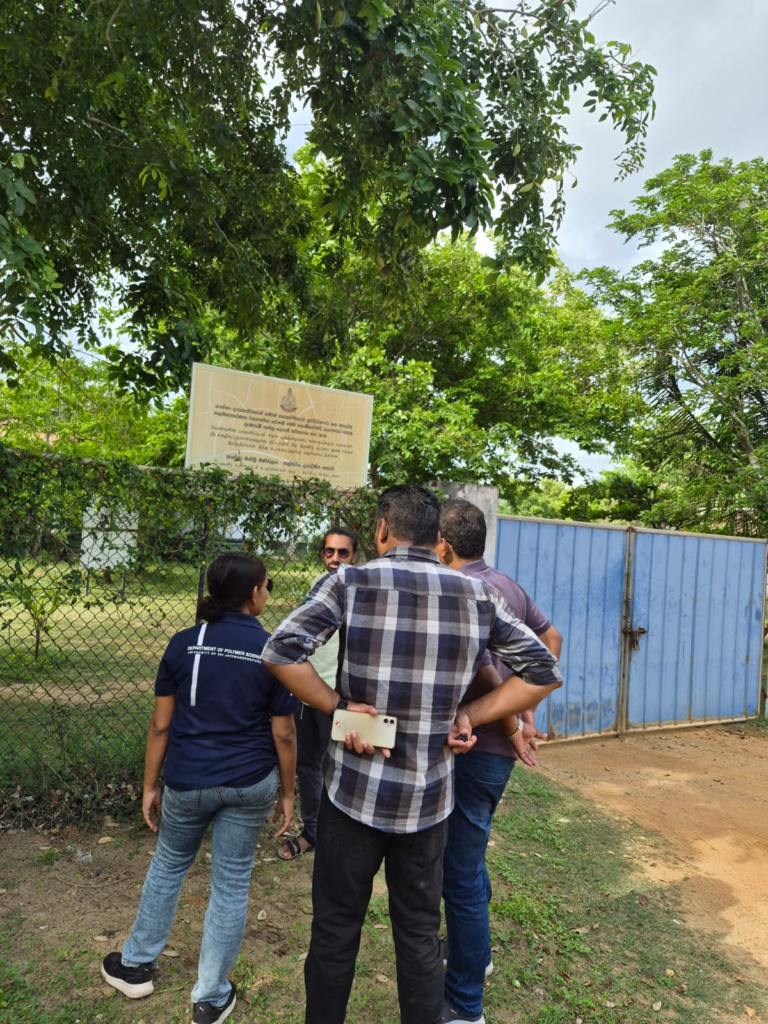
Infrastructure under scrutiny. The team assesses the existing polymer waste management facility. Preliminary finding: the site lacks scientific site selection, proper access, and community integration.
THE ROAD AHEAD
A Two-Pronged Strategy for Lasting Impact
The DPS team has returned from Kalpitiya not with a report, but with a plan. The strategy is deliberate, evidence-driven, and anchored in the understanding that meaningful environmental change must be owned by the community it serves.
- Policy Engagement & Legislative Reform: The department will engage with government bodies and relevant authorities to advocate for evidence-based legislation on plastic waste management. The approach: begin with a small, well-studied pilot area, establish a replicable model, and then scale. Science will be used not just to understand the problem — but to drive real policy reform from the ground up.
- Community-Based Recycling & Upcycling Programmes: The DPS will develop technically feasible recycling and upcycling pathways for the polymer waste streams identified in Kalpitiya — including fishing nets, flexible packaging, and EPS foam. These processes will be designed to support local livelihoods: transforming what is currently a liability into a source of income for fishing communities and local entrepreneurs.
“Never stop believing you can be the change. We have the tools, and we are using them to make the world better.”
— Mr. Dilsiri Walikala, Founder & CEO, Kite Surfing Lanka & Community Collaborator
A CALL TO ACTION
Science Alone Is Not Enough
The Department of Polymer Science is uniquely positioned to lead this work. With deep expertise in polymer materials, processing, and characterisation, and with the international networks to draw on, USJ’s DPS brings genuine scientific capability to a problem that has, for too long, been treated as intractable.
But the team is clear-eyed about one thing: science alone will not solve this. Solutions to environmental crises at the community level require the active participation of government officers, policymakers, local authorities, and industry partners — people who must be willing to step away from their desks, travel to the coastline, and hear what the people living there have to say.
This visit to Kalpitiya is therefore both a research initiative and an invitation — to every government officer, every decision-maker, every professional who holds influence over Sri Lanka’s environment and its communities: come to the ground. Listen. And then act.
Be the Change Sri Lanka’s Coastlines Need
The Department of Polymer Science, FAS, USJ, welcomes collaboration from government bodies, industry partners, NGOs, and community organisations committed to evidence-based plastic waste management.
#BeTheChange #Kalpitiya #SaveOurOcean #PolymerScience
#USJ #ScienceForSociety #CircularEconomy