

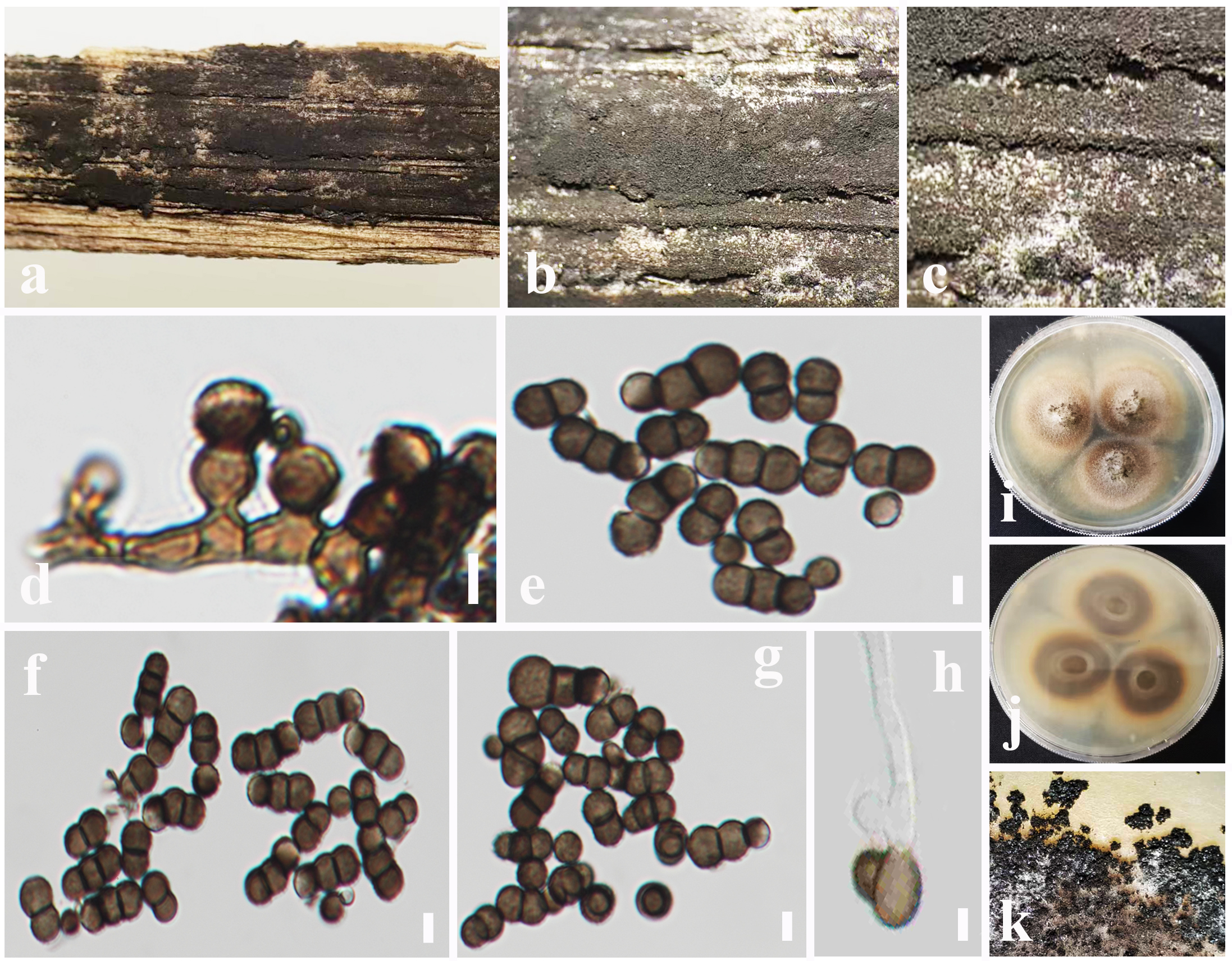
Researchers at the University of Sri Jayewardenepura have discovered a previously unknown fungal species and documented new fungal records for Sri Lanka, highlighting the hidden biodiversity present even within urban university environments.
The study, led by Dr. Kasun M. Thambugala from the Genetics and Molecular Biology Unit, Faculty of Applied Sciences, University of Sri Jayewardenepura, reports the discovery of a new microfungal species named Torula srijayewardenepurensis, honouring the university where the fungus was found. The findings were recently published in the international peer-reviewed journal Studies in Fungi.
The newly identified species was isolated from decaying plant material collected within the university premises. Using a combination of detailed microscopic observations and advanced multi-gene phylogenetic analyses, the research team confirmed that the fungus represents a species previously unknown to science. In addition to this discovery, the study reports two fungal species, Apiospora pseudorasikravindrae and Paradictyoarthrinium diffractum, as new records for Sri Lanka, expanding the country’s known fungal diversity.
Although often overlooked, microfungi play vital roles in ecosystems by breaking down plant material and recycling nutrients back into the soil. The findings demonstrate that urban and human-influenced environments, such as university campuses, can serve as important reservoirs of undocumented biodiversity. “This discovery shows that even familiar surroundings can harbour organisms new to science,” said Dr. Thambugala. “It also highlights the importance of continued biodiversity research in Sri Lanka, particularly using modern molecular techniques alongside classical taxonomy.”
The research was conducted at the Genetics and Molecular Biology Unit of the Faculty of Applied Sciences, University of Sri Jayewardenepura, in collaboration with national and international partners. Naming the new species after the university not only honours the institution’s contribution to scientific research but also places Sri Lanka firmly on the global map of fungal biodiversity studies. The study underscores the growing research strength of the University of Sri Jayewardenepura in the fields of microbiology, biodiversity, and molecular biology, and reinforces its commitment to advancing knowledge through high-quality scientific research. The scientific paper published on the above finding can be accessed via:
https://www.maxapress.com/article/doi/10.48130/sif-0025-0035